


Financing for equity in primary and secondary education
1. Education resources to subnational governments
2. Education resources to schools
3. Education resources to students and families
4. Social policies and family support programmes
Introduction
In Lithuania, the Ministry of Education, Science and Sport is responsible for national legislation, while municipalities develop and implement their own strategic education plans. Municipalities are tasked with ensuring access to formal education up to the age of 16.
Education funding comes from both the central and municipal governments. In 2018, the system for financing general education schools shifted from a per-capita “pupil/student basket” model, in place since 2002, to a “class basket” model. This approach links funding to both the costs of basic education and the implementation of curricula and applies to pre-school, pre-primary, and general education programmes.
Under the class basket model, around 80% of funding is allocated based on class size rather than individual pupils, while the remaining 20% covers textbooks and other educational supplies according to actual pupil numbers. The central government provides the majority of the class basket funds, and municipalities retain discretion over their portion, which they use to support the organisation and management of the educational process.
The OECD (2019) illustrated the flow of public funding to public primary and lower secondary educational institutions in Lithuania.
1. Education resources to subnational governments
Lithuania’s 60 municipalities have independent budgets approved by their respective municipal councils. These budgets are funded through a share of personal income tax, other local taxes and levies, state budget grants, and additional revenues earmarked for functions transferred from the state or for providing public services.
The central government also provides funds to municipalities to support the organisation and management of education, deliver educational aid in schools, assess learning achievements, and finance curricula that supplement formal education.
2. Education resources to schools
Class Basket Funding
The central government distributes class basket funds to schools according to the formula established in the 2018 Rules for Calculation, Allocation, and Application of Teaching Funds (Resolution no. 679). Total school funds (ML) are calculated as:

Funds for the implementation of the educational plan (Lup) cover educational activities and are calculated as:
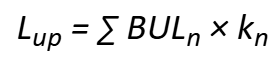
where BULn represents the basic education funds for a given class or group and kn is the corresponding number of conditional classes or groups. Basic education funds (BULn) are calculated by multiplying a teacher’s salary by a basic salary factor, the number of teachers in a class, twelve months, and a social security factor.
Funds for reducing the differences in educational funding needs between schools (Lišlyg) make up 2.4 per cent of the funds for the implementation of the educational plan. These funds are intended to support pupils from an adverse socioeconomic or cultural environment and provide additional funding for special schools and students with additional needs, including those studying in a minority language.
Funds for other educational needs (Lkmr) are included in the total allocation to address additional requirements of schools. The class basket funds have also been expanded to include private schools.
Municipalities are responsible for financing "education aid". They use their portion of education funding to finance the positions of education support specialists within their schools or to purchase these services from other providers.
3. Education resources to students and families
Under the 2006 Law on Social Assistance for Pupils, two forms of social assistance are provided: free meals (see Section 5) and support for the purchase of school supplies.
Purchase of School Supplies
Assistance for school supplies is administered by municipal administrations. Eligibility requires that the average monthly income per family member, or per person living alone, is less than 1.5 times the amount of the State Supported Income (SSI). In 2025, this threshold corresponded to a monthly income of less than EUR 331.5. Depending on the family’s living conditions, the limit may be raised to 2 times the SSI, equivalent to EUR 442 per month in 2025. Pupils receive an amount equivalent to 2 times the basic social benefit (BSB) for the purchase of school supplies, which in 2025 amounted to EUR 140.
For information about “education support” (švietimo pagalba) provided to pupiles with special needs please see Lithuania’s PEER profile on Inclusion.
4. Social policies and family support programmes
Universal Child Benefit
In Lithuania, each child is entitled to a child benefit of EUR 122.5 per month. The benefit is available until the age of 18, but may continue until the age of 23 if the child is enrolled in general education programmes. Families must apply for the benefit through their municipalities.
Supplementary Child Allowance for Large, Needy, or Disabled Families
Children from large or economically disadvantaged families, or those with disabilities, may receive an additional allowance of EUR 72.1 per month. A family is considered large if it has three or more children, and ‘needy’ if it has one or two children with an average monthly income below EUR 442 per family member.
Family Card Programme
Large families and families caring for children with disabilities may also qualify for a family card. These cards provide special privileges from public and private legal entities, including preferential treatment, additional services, discounts, benefits, gifting, or other promotional initiatives for goods and services.
5. School meal programmes
Free Meals for Pupils
The Free Meals for Pupils programme, launched in 2007, is administered by the Ministry of Education, Science, and Sports with support from the Ministry of Social Security and Labour, the Ministry of Health, and local municipalities.
As of 2021, pupils in pre-primary education and those in the first and second grades of primary education receive free lunch regardless of family income. Pupils in higher grades are eligible for free lunches if the average monthly income per family member, or per person living alone, is less than 1.5 or 2 times the amount of the State Supported Income, depending on the family’s circumstances.
The daily allocation per pupil ranges from 1.6% to 9.7% of the basic social benefit, which in 2025 corresponded to EUR 1.12 to 6.79. Nutritionists are involved in the planning of the school meals to ensure they meet dietary standards.
This profile has been reviewed by national expert Rimantas Dumčius.










