


Financing for equity in primary and secondary education
1. Education resources to subnational governments
2. Education resources to schools
3. Education resources to students and families
4. Social policies and family support programmes
Introduction
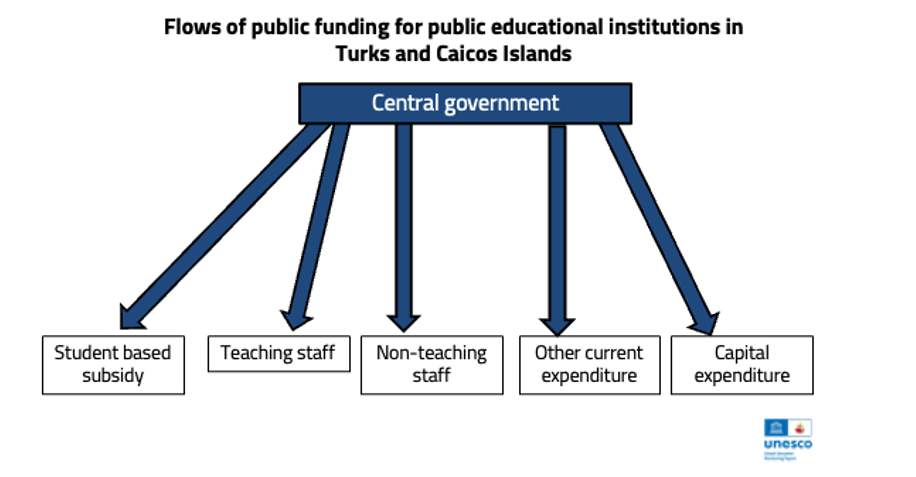
In the Turks and Caicos Islands, education is centrally administered by the Ministry of Education, Youth, Sports and Culture, with management overseen by the Director of Education, who delegates operational responsibilities to school principals. Financial resources are allocated directly to schools, with principals assuming responsibility for their administration.
1. Education resources to subnational governments
Resources are allocated directly at the school level.
2. Education resources to schools
Funds for managing and maintaining schools are administered directly by the schools themselves, while the Special Education Services within the Ministry of Education oversees and distributes resources specifically for special education programmes.
Special Education Services
The Special Education Needs Services (SENS) Department provides support, resources, and opportunities for individuals with special educational needs and disabilities, serving children and adolescents aged 4–18 years. Initially funded by parents and advocates, the programme has been fully government-funded and free of charge since 2007. As part of the Ministry of Education, SENS develops programmes for inclusive education, early intervention, and specialised services through assessments, targeted interventions, and therapeutic support, while also prioritising educator training and public awareness to foster a more inclusive system. The programme ensures equal access to quality education for all genders, removes gender-based barriers, and offers tailored support for students with diverse needs. Since 2018, the Alternative Education Policy has complemented these efforts by providing inclusive educational opportunities for students at risk of disengaging from formal education due to social, economic, physical, psychological, or behavioural challenges, including teenage pregnancy.
3. Education resources to students and families
No information has been found regarding resources from the Ministry of Education targeting students and their families at the basic education level. Only higher education scholarships have been identified.
4. Social policies and family support programmes
No information has been found regarding social policies with an education component targeting students and their families.
5. School meal programmes
National School Nutrition Programme
The National School Nutrition Programme, established in 2023 and managed by the Ministry of Education, Sport, Youth and Culture, seeks to ensure that every child in public schools, and in a pilot phase one private primary and one private secondary school, has access to at least one nutritious meal during the school day. Eligibility is determined by teachers who identify children without packed lunches or money to purchase meals, as well as those consistently lacking access to balanced nutrition. Referrals are also made by the Welfare Department for children in foster care, children’s homes, or families receiving departmental services. In addition, parents or guardians may request support by completing a school-provided form, for instance in cases of unemployment or when caring for multiple children. Guidance counsellors are further empowered to recommend students based on observed need, ensuring a comprehensive safety net for vulnerable learners.










